
From The Ground Up
The Journal
Issue 09
...read moreFor most of my life, sweating felt incidental — something that happened during exercise, or on a hot day. I never gave it much thought. But after living with Long Covid, I came to realise how precious it is. And how essential!
When my body stopped functioning the way it used to, even the ability to sweat disappeared. It was as if my internal systems had stalled, and with them, the sense of vitality that comes from a body in flow. So when sweating finally returned (after daily infrared sauna for about four weeks), it felt miraculous. Life-affirming, even.
Sweat is one of the body’s most powerful cleansing tools. It’s how we release heavy metals, mold toxins and chemical buildup. It supports the lymphatic system, regulates temperature and connects us to our animal instincts — to the primal intelligence of the body doing exactly what it was designed to do.
If you're not fortunate enough to be sweating it out on a beautiful beach somewhere this summer, opt for gentle movement in the sun, warm baths with magnesium salts, a sauna, or simply taking time to recalibrate so that your system gets the rest it needs to keep this detox pathway open.
Issue 08
...read moreSo much of the wellness space today, especially biohacking, is framed around the self. It’s often solitary, data-driven and precision-obsessed, but lately, I’ve been curious about what happens when we shift the lens from me to we.
I went to a group Gravity workshop recently, led by acupuncturist Toby Stephens, and it completely reframed my relationship with both the earth and other people. We weren’t doing much — standing, sensing, breathing — but at one point, I stood in the centre of a circle of strangers and felt something shift. There was no physical contact, yet the field around me felt thick, charged and emotional. A kind of collective touch. It caught me off guard.
It reminded me that we’re constantly exchanging energy, even in stillness, and that healing, especially for the long haul, might not always come from another supplement or another metric. Sometimes it comes from being in a room with others, attuning to the invisible web between us.
Maybe the future of longevity isn’t about going further alone, but deeper together.
Issue 07
...read moreOne lingering part of Long Covid I still haven’t managed to resolve is post-exertional malaise, or PEM. It’s something many people with chronic conditions like ME/CFS, fibromyalgia, or Lyme disease will recognise instantly. You can feel completely fine, go about your day as usual, and then suddenly hit a wall — overwhelmed by a wave of physical and mental exhaustion so intense, you have no choice but to lie down.
For a long time, I assumed exercise was the trigger. I thought I was setting myself back by trying to build strength. But after tracking my patterns with my Oura ring, I realised something unexpected: the crashes weren’t coming after workouts, but often after long, gentle, enjoyable social engagements. The fallout sometimes lasts into the next day, or the one after that.
It’s hard to describe to anyone who hasn’t felt it, but I imagine even the healthiest among us experience something similar from time to time — burnout, maybe. That feeling of being emptied out by too much doing, even when the “doing” felt good.
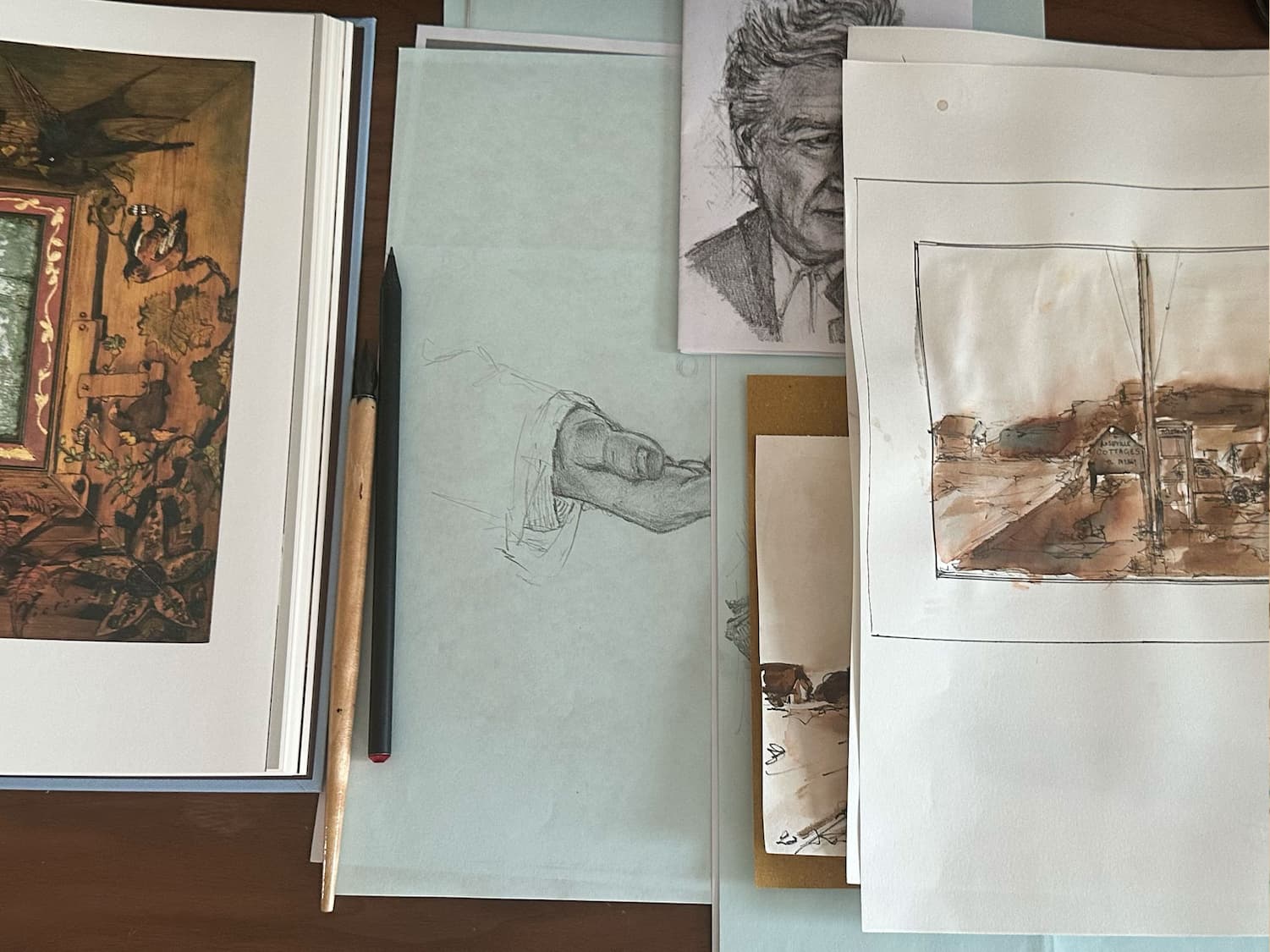
What I’ve found helps most in those moments — when even reading feels like an effort — is spending small pockets of time being creative. I'll sketch things I want to remember (I have a terrible short-term memory), write, map out future Vanderohe formulas. Nothing pressured, nothing polished; just simple acts of making. Over time, these scraps begin to add up. Instead of looking back at empty hours, I’m left with a kind of scrapbook of memories and meaningful moments, built during the pause.
Issue 06
...read moreOver the last few years, magnesium has provided a gentle support for me in managing fatigue, supporting recovery and trying to get a decent night's sleep. I take a long salt bath every evening to ease tension and a daily magnesium glycinate supplement (twice a day, morning and evening) to support deep, restorative rest. I've experimented with magnesium sprays to help with muscle pain and cramping, but I seem to be allergic to the topical magnesium creams/sprays/gels.
There are lots of types of magnesium, but glycinate tends to be best supplement for sleep: it’s well-absorbed, gentle on the stomach, and supports the calming neurotransmitter GABA. Citrate is better for digestion, malate for energy and muscle recovery, threonate for cognitive function, but glycinate is the go-to for sleep.
I'm never quite sure whether there is a true chemical knock-on in my body when I do these things, or whether it's a sort of placebo effect from the ritual, but either way, these two forms of magnesium seem to have helped my body remember how to unwind and let go. And on the tough nights, even the ritual of pouring the salt in my bath feels like a cue to relax.
Issue 05
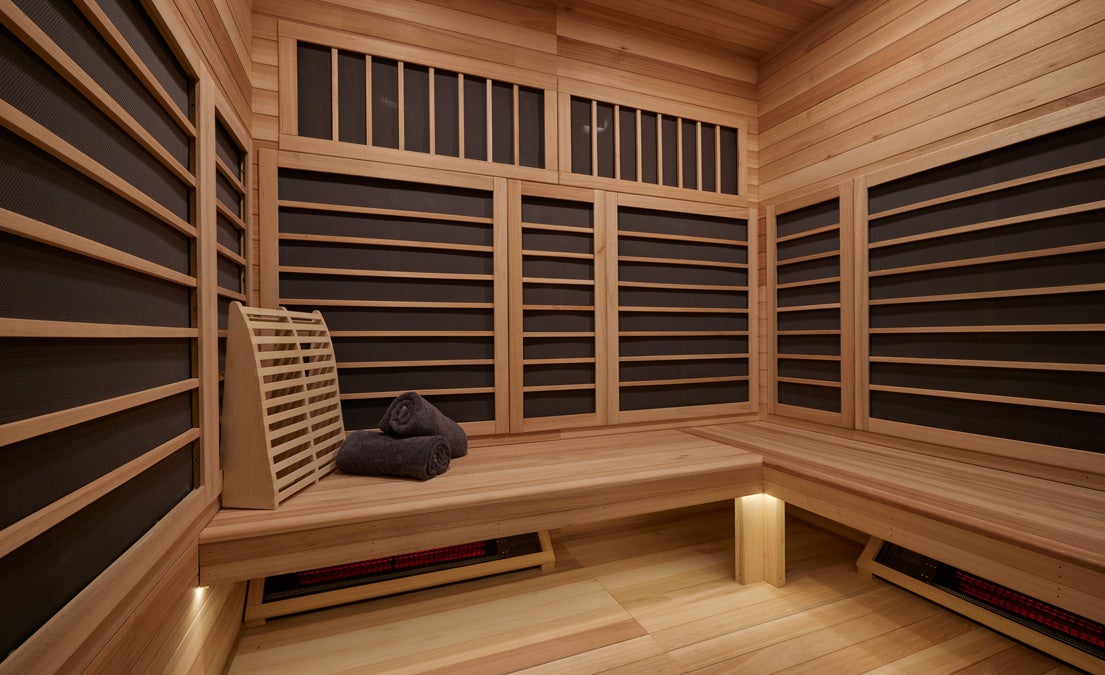
...read moreOne of the most powerful tools in my healing journey has been the Sunlighten Infrared Sauna — truly my A1 recovery hack. Infrared saunas use light waves to heat the body directly, unlike traditional saunas that simply heat the air. This deep, gentle heat penetrates tissues, increases circulation, supports detoxification and activates the parasympathetic nervous system, which helps the body reset.
It’s been instrumental in my recovery from Long Covid — helping me rebuild energy, regulate my system after long flights and even rescue me on days after poor sleep. Each session leaves me with the feeling of having just finished a great workout, without the physical exertion.
I usually do 40 minutes in the evening, reading or listening to music, and I always follow with electrolytes to stay balanced and hydrated. It’s a ritual I now rely on and one which I credit for rebuilding my resilience.

Issue 04
...read moreThe body is its own alchemist: always shifting, repairing, transforming. Through breath, through motion, through what we choose to nourish ourselves with, we create change at the most elemental level. Lately — really since I've been wearing the Oura ring and had every bit of activity I've done put into sharp relief — I’ve focussed more on transmuting stillness into energy, stagnation into flow. Whether it’s a walk, a stretch, a swim, or a more structured practice, the act of moving becomes a kind of alchemy. It really does bring about an instant change. I understand completely why Phil Stutz's number one task for any of his patients is to get moving. It doesn't have to be about intensity, but consistency is important. The body remembers and responds, and if you think of your daily practices as 'alchemy', you begin to see that you’re not simply maintaining the body; you’re actively transforming it.
Issue 03
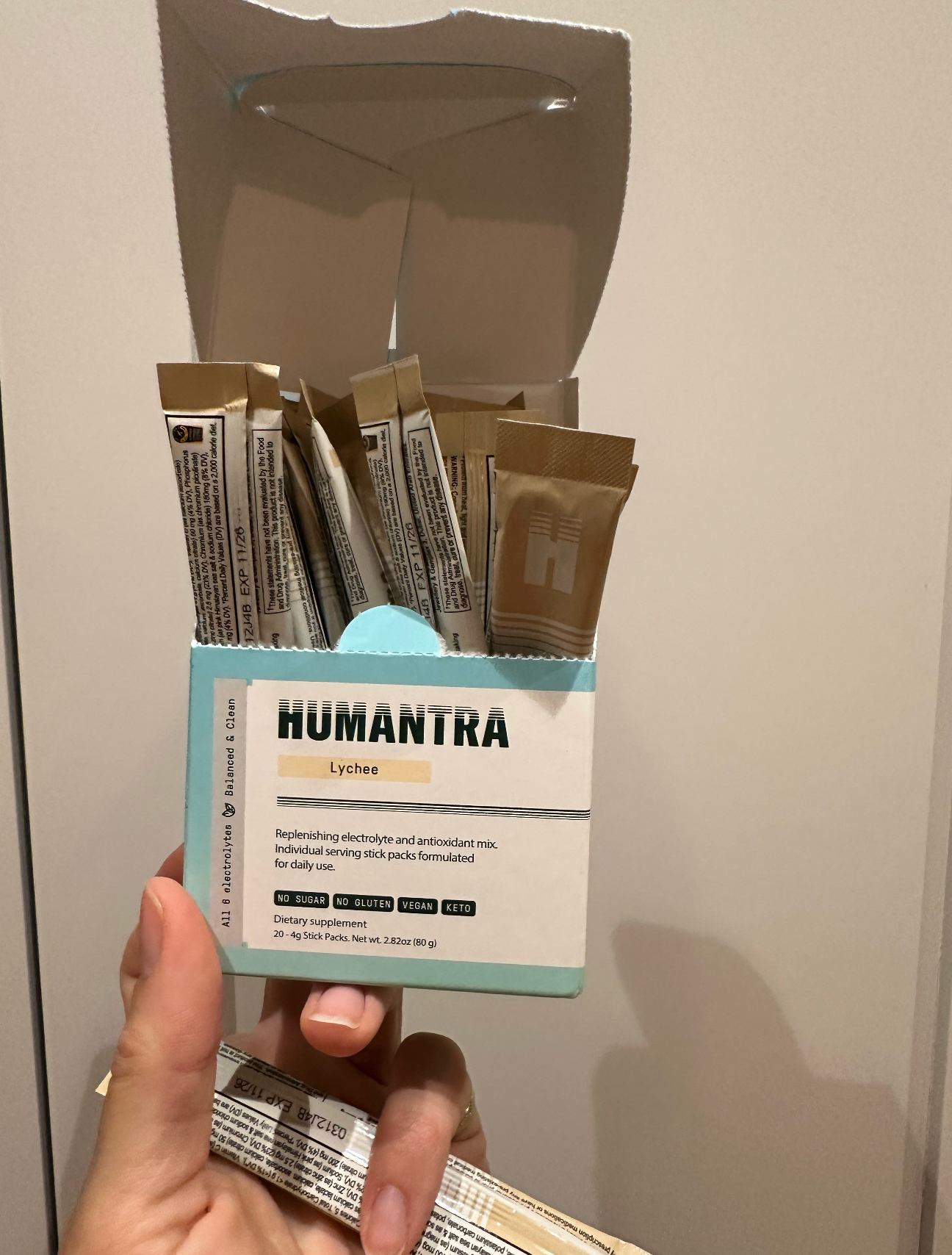
...read moreHeat, for me, is still one of the hardest things to navigate. It intensifies the symptoms of POTS — sudden dizziness, fatigue, that strange, disorienting feeling that comes when your body just can’t regulate as it should. It’s not about drinking more water; it’s about helping the body hold onto that hydration — and that’s where electrolytes have helped me recently. I take them daily now: a sachet in water in the morning and again in the afternoon, or sometimes gummies if I’m out. My go-tos are Humantra’s lychee flavour sachets and Fraction One’s Electrolyte Gummies — all clean, well-formulated, and easy to carry — or Clean Slate electrolytes, for a citric acid–free option. Since incorporating them into my day consistently, I’ve noticed a real shift: steadier energy, fewer dizzy spells, less of that heavy-limbed crash that used to come without warning in and after the heat. It’s subtle, but powerful. Not a fix, but a steadying. And for anyone navigating fatigue, burnout, or the lingering layers of Long Covid — it’s a support system worth exploring.
Issue 02
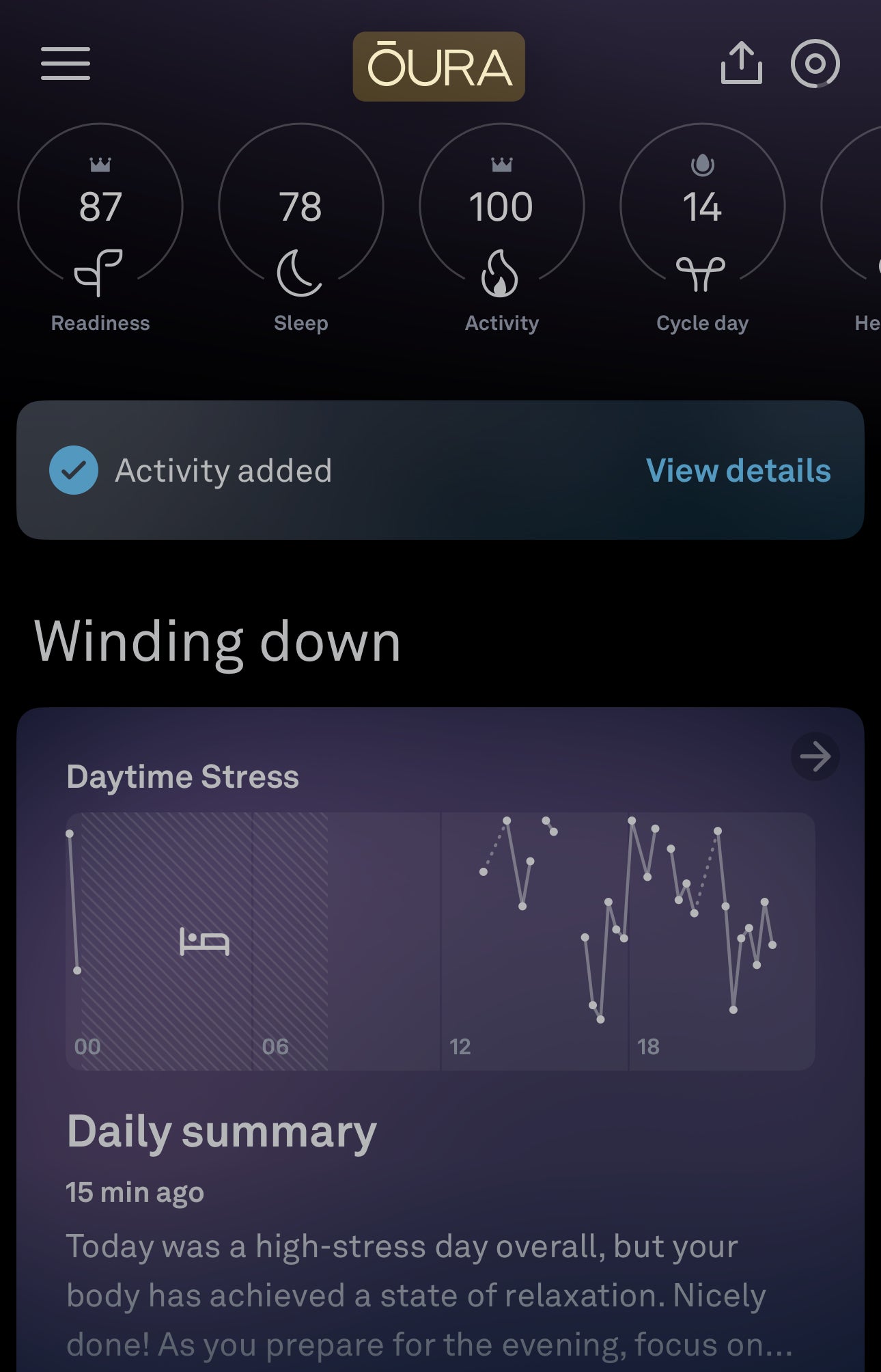
...read moreI’ve been wearing the Oura Ring daily and it’s quietly transformed how I move through my days. It appeals to my (mildly!) competitive nature, keeping me accountable and nudging me towards better habits: more consistent exercise, earlier bedtimes and more conscious stress management. It’s also helped me recognise patterns in chronic fatigue, offering really helpful insight into what supports or drains me — which is often not at all what I'd have imagined without wearing the ring.
That said, I can completely understand how something so data-driven could tip into obsession. It’s easy to let a “bad score” affect your mood or decisions, especially on already stressful days. One tip I’ve found helpful: take it off when you need to. A break — whether for a day, a week, or just during high-stress periods — can help keep the relationship healthy, rather than all-consuming.
Issue 01
...read moreAs some of you might know, I’ve been on a slow healing journey over the past few years after suffering from Long Covid. It's been a pretty brutal journey, but has opened my eyes to the potential benefits of all those annoying, but probably rather effective, longevity hacks. Given that the chronic pain and dysautonomia I developed from Long Covid likely shares its root cause(s) with a whole range of other health issues some of you might be struggling with, I will share my guinea-pigging here.
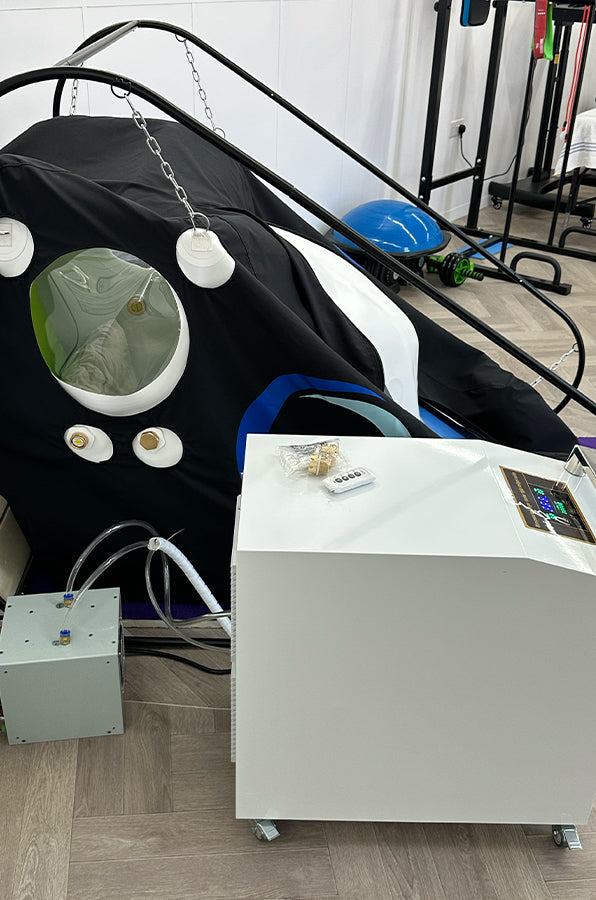
First up is hyperbaric oxygen therapy, or HBOT. I’ve recently started an 8-week course: two sessions a week in a soft chamber at 1.3-1.5 ATA pressure level, for 20-30 mins. During each session, you lie inside a pressurised chamber and breathe in pure oxygen while your body absorbs it at a deeper level to support healing and regeneration. Adjusting to the increasing pressure is the only slightly uncomfortable part, but you soon get used to it. Two sessions in, I definitely feel a lift in my energy levels, but increasing to 1.5 ATA proved too much for me (muscle cramping), so I'll be sticking to 1.3 for the time being.
