Re-engagement...
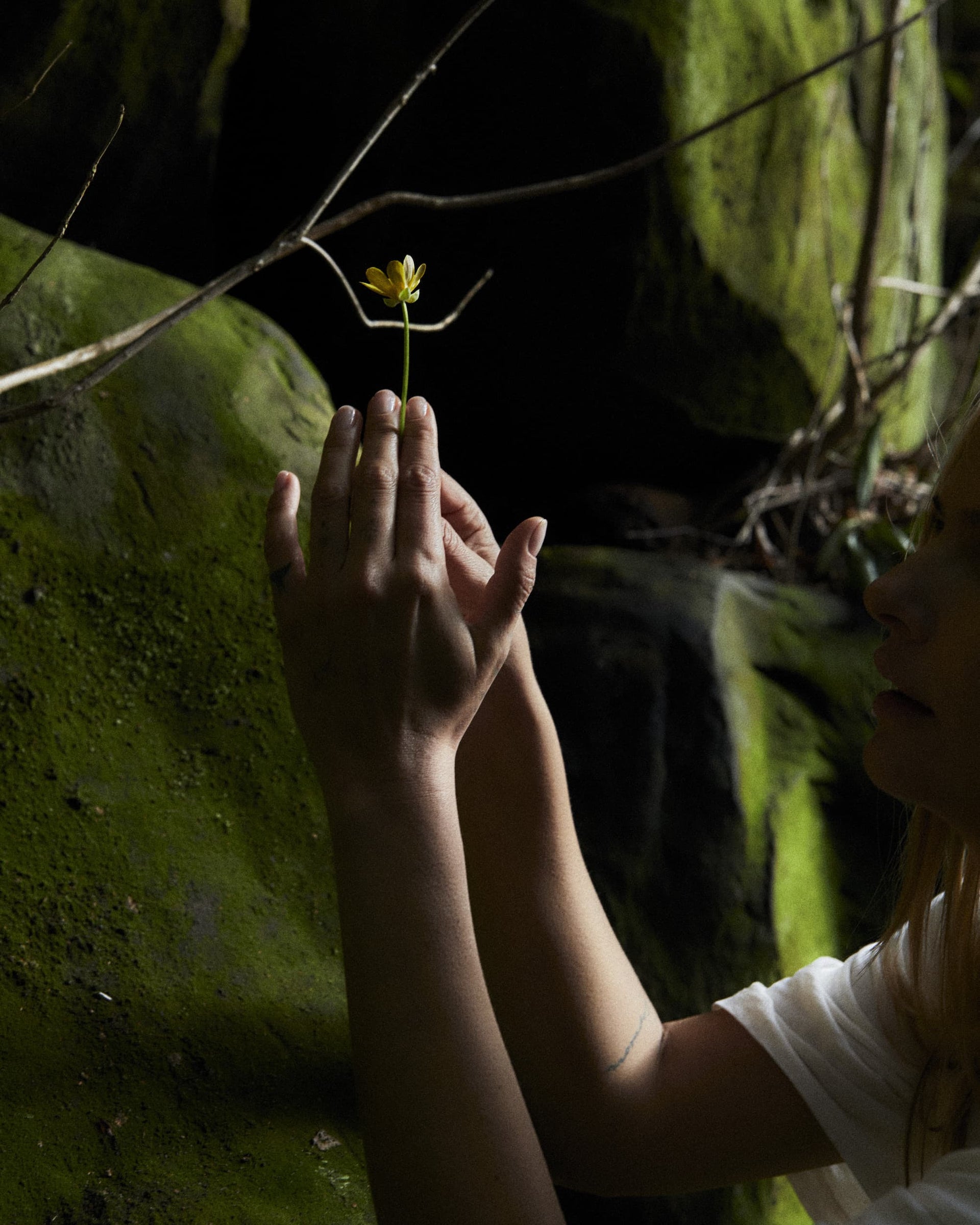
There’s an ancient understanding, held by many Indigenous traditions around the world, that the Earth is not a collection of resources but a community of living relationships. Rivers are not merely water, nor trees simply timber; they are beings with whom we exist in reciprocity. From this perspective, personhood extends far beyond our own species, and life is recognised not by what defines us individually, but by how we participate in the living world.
Whenever things have felt uncertain, I've always found myself asking the universe to simply "show me the way". I've never known who, or what, I'm asking, but I'm almost always answered in some shape or form. Recently, as I approached one of the most pivotal and difficult moments of my adult life, I escaped to the countryside for a day to catch my breath. I set off along a path cut through long meadow grass and noticed all of a sudden that the grass was thick with butterflies. They brushed past me the length of the path.
Even when I returned to the cottage where I was staying later that afternoon, the butterflies seemed to follow. One settled onto my hand and remained there long enough for me to feel its pulse against my thumb. In that fleeting moment, feeling that tiny beat, it was as though time collapsed and I was one with the butterfly. When it finally opened its wings, what had looked like weathered bark revealed two beautiful owl-like eyes, before it flew away.
I was reminded of the same feeling while reading There Are Rivers in the Sky by Elif Shafak, which imagines rivers as carriers of far more than just water. They hold memory, history, grief and joy, connecting people who never meet and places separated by centuries. The rivers serve as a reminder that nothing exists in isolation and that every life is part of a much larger current.
Robert Macfarlane explores a similar idea in Is a River Alive?, asking what changes if we stop thinking of rivers as objects and begin relating to them as living presences. If a river is not simply something to own, divert or exploit, but something with which we are in relationship, then our responsibilities towards it begin to change. More importantly, so does our understanding of ourselves.
Modern life has encouraged us to think of ourselves as separate from the natural world, yet every breath we take is borrowed from forests and oceans. Every meal is the work of soil, fungi, insects, rain and sunlight, and our nervous systems evolved in conversation with birdsong, flowing water and the changing seasons. The more closely we look, the less convincing the idea of the independent self becomes.
Perhaps that is why asking a question of "the universe" or a river or a tree needn't be mystical. It is simply an act of humility: an acknowledgement that wisdom may exist beyond ourselves. Whether we call it prayer, meditation or simply paying attention hardly matters. What matters is that we begin to notice. Noticing then leads to an expansion of our own understanding of life. That tiny butterfly pulse, for example, invited me to consider that the featherlight form on my thumb has, despite its appearance, the endurance to cross continents that no human has.
At Vanderohe, we have always believed that true wellbeing cannot be separated from the wellbeing of the Earth. Our rituals begin with the soil. The botanicals we work with are not simply ingredients chosen for their efficacy; they are ancient companions whose gifts have emerged through millions of years of evolution. To work with them is to enter into relationship — with respect, humility and gratitude. Every Vanderohe ritual is an invitation to pause, inhale deeply and...consider the vast possibilities those seemingly small plant molecules can provide.
This issue of From the Ground Up is an invitation to interact with the living world around you, and to recognise how easily we have drifted from the web of relationships that sustains us by adapting to the narrowing vision of modern life. To recognise that nature moves with us, responds to us and is greater than us is not simply an ethical ideal, but a way of seeing — and of expansion.
Mary Oliver wrote in her poem, Wild Geese:
Whoever you are, no matter how lonely,
the world offers itself to your imagination,
calls to you like the wild geese, harsh and exciting —
over and over announcing your place
in the family of things.
Olivia x

BTS

Roots

Body

Long Haul

Mind